Understanding the 2030 Regenda
What We’re Evolving Beyond | From the SDGs to our RCOs

Understanding the
2030 Regenda
What We’re Evolving Beyond | From the SDGs to our RCOs

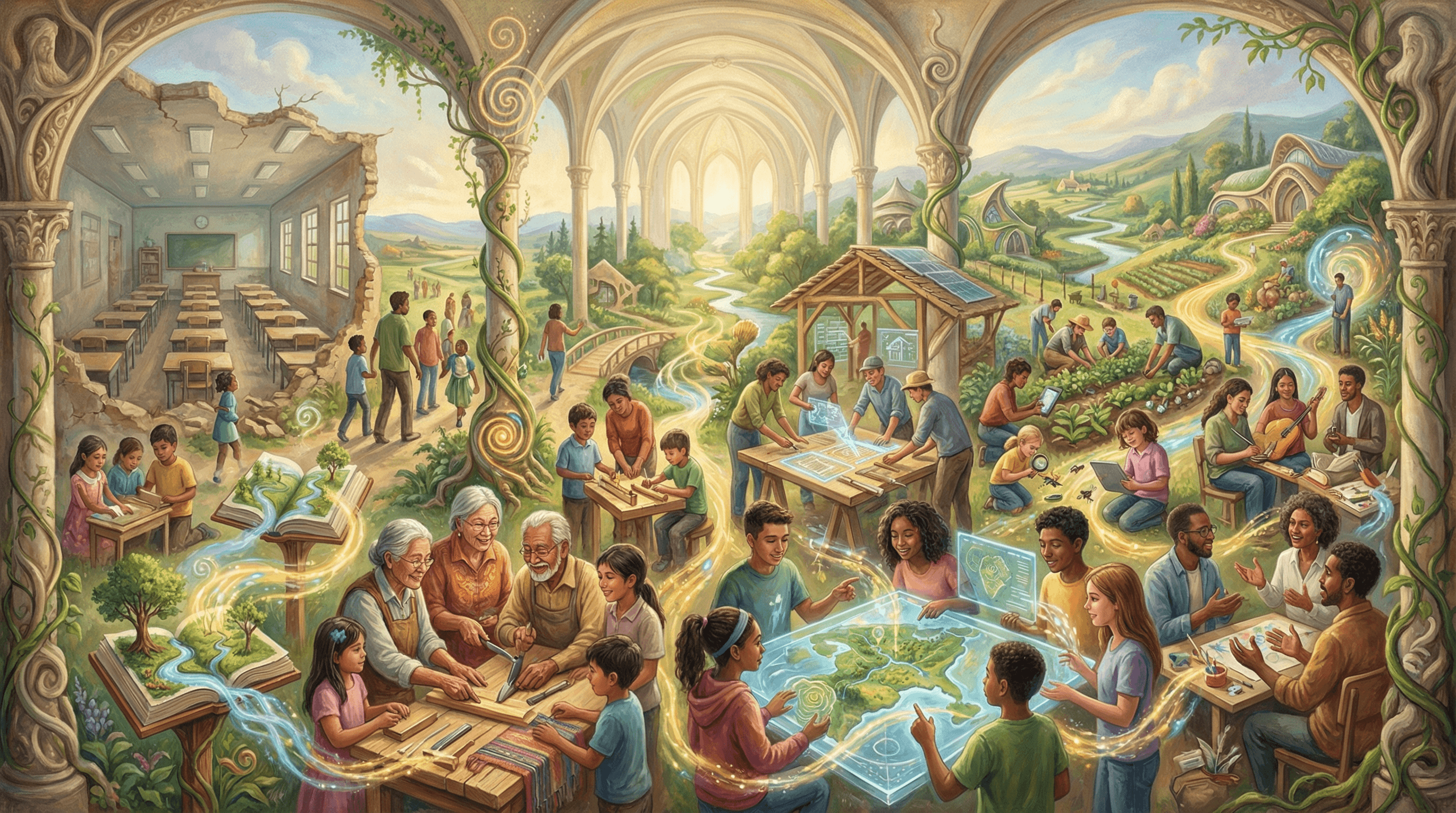
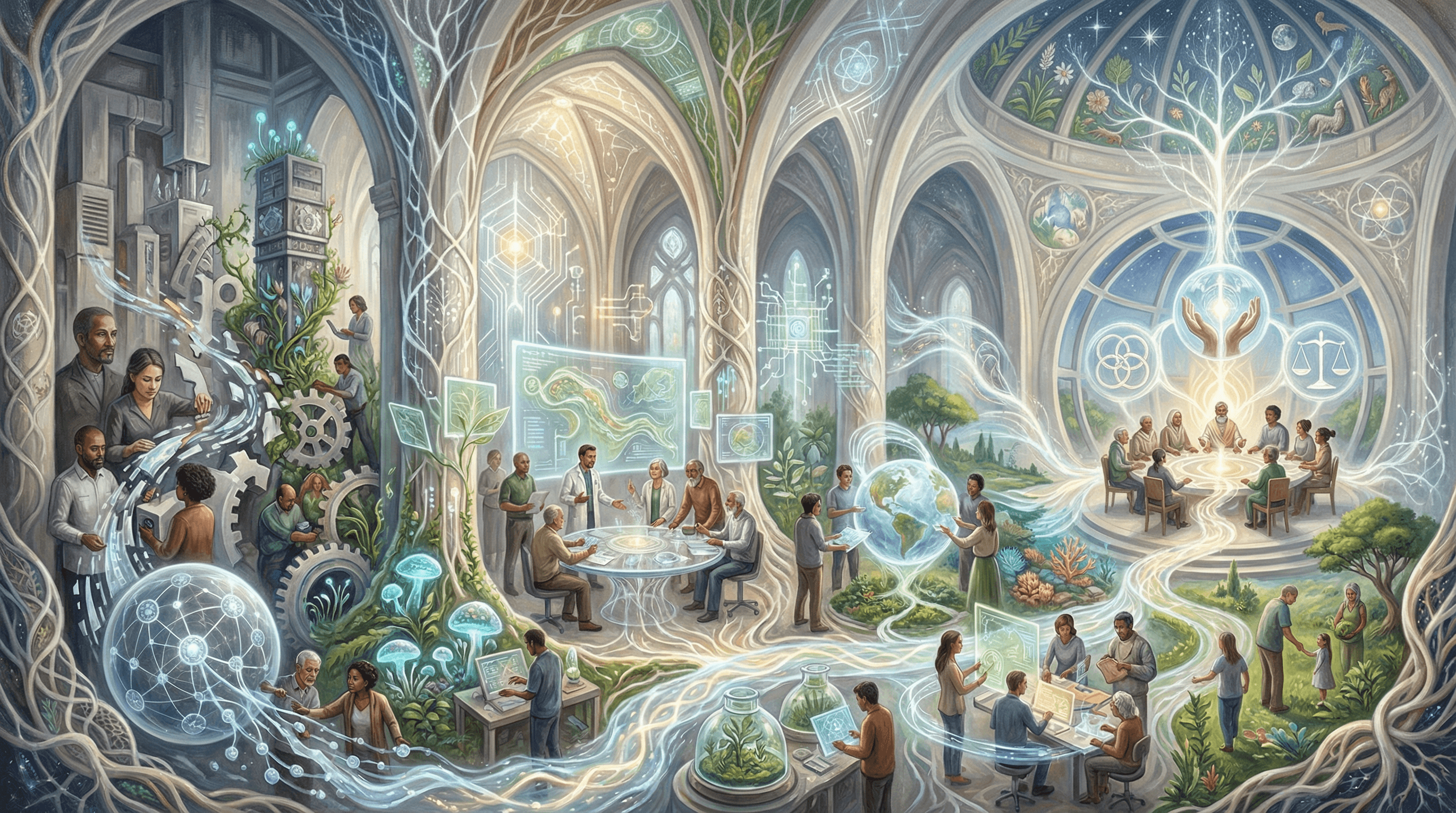
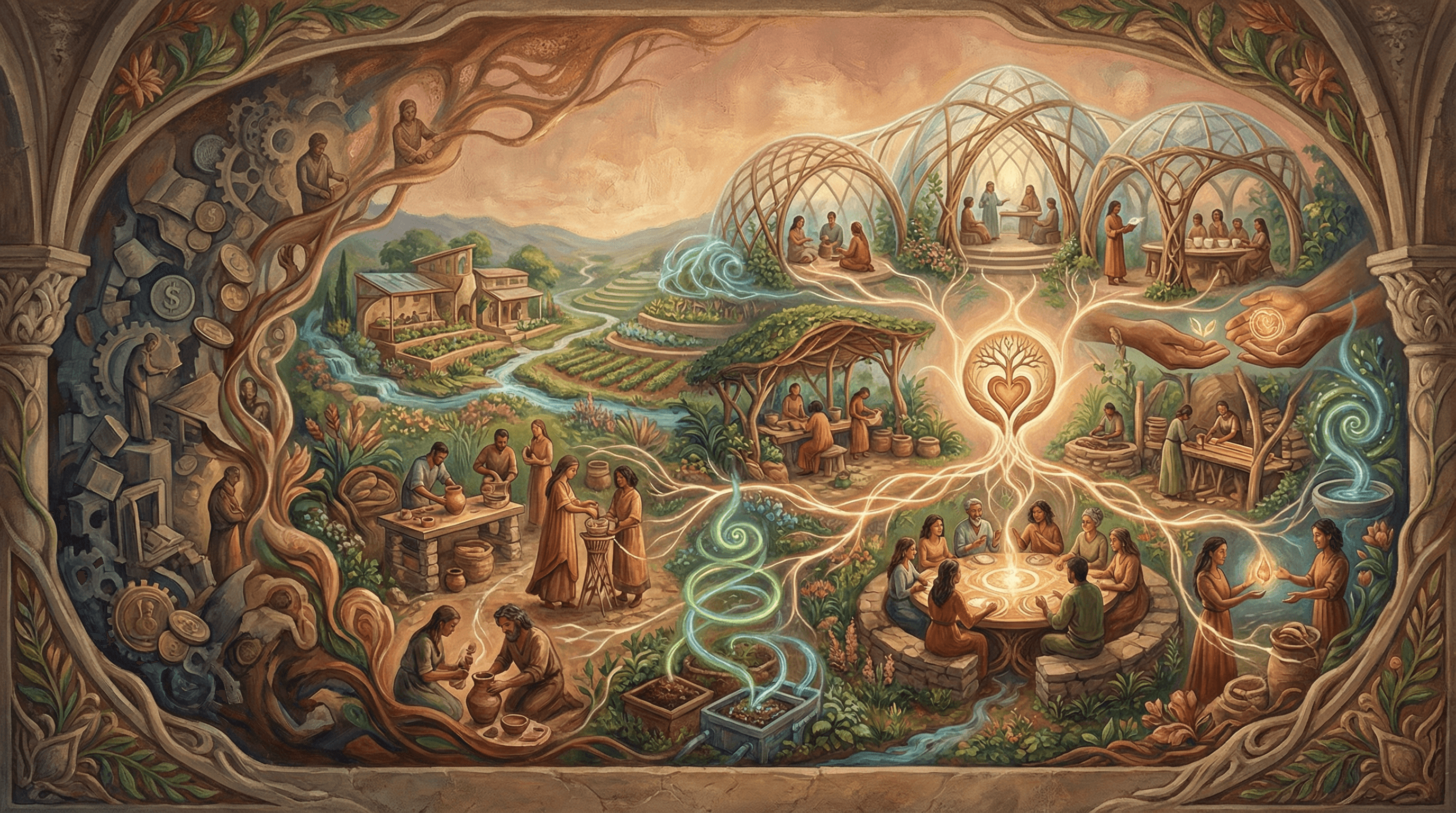
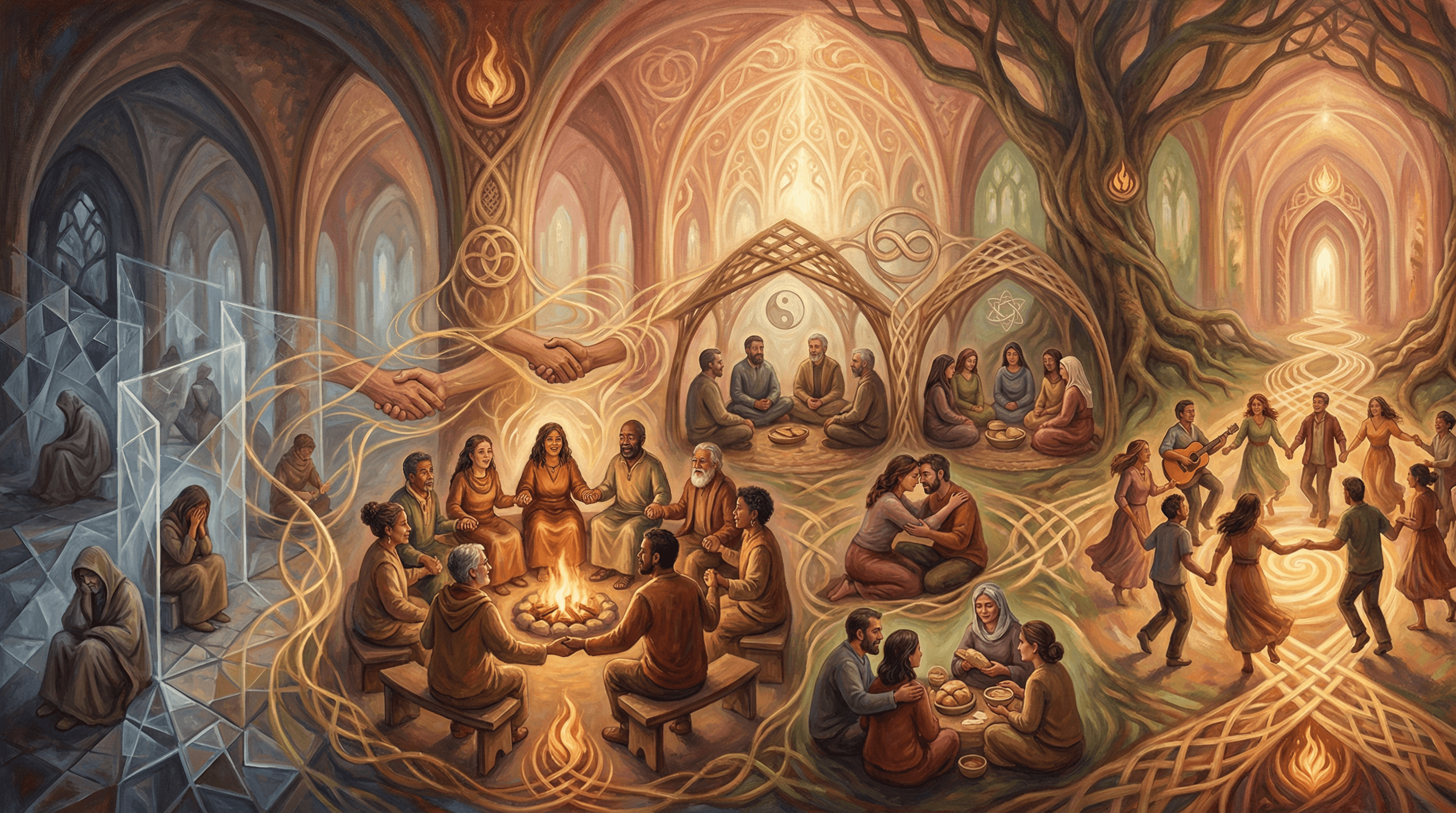
The Regenerative Community Objectives represent a new compass for the human species — a living framework designed to guide our collective evolution from system dependence to global sovereignty. Each RCO is more than a goal — it is a living principle, a call to embody new systems of life that honor both human potential and planetary intelligence. Together, they form the architecture of a civilization rooted in ecological harmony, conscious collaboration, and cultural renewal.
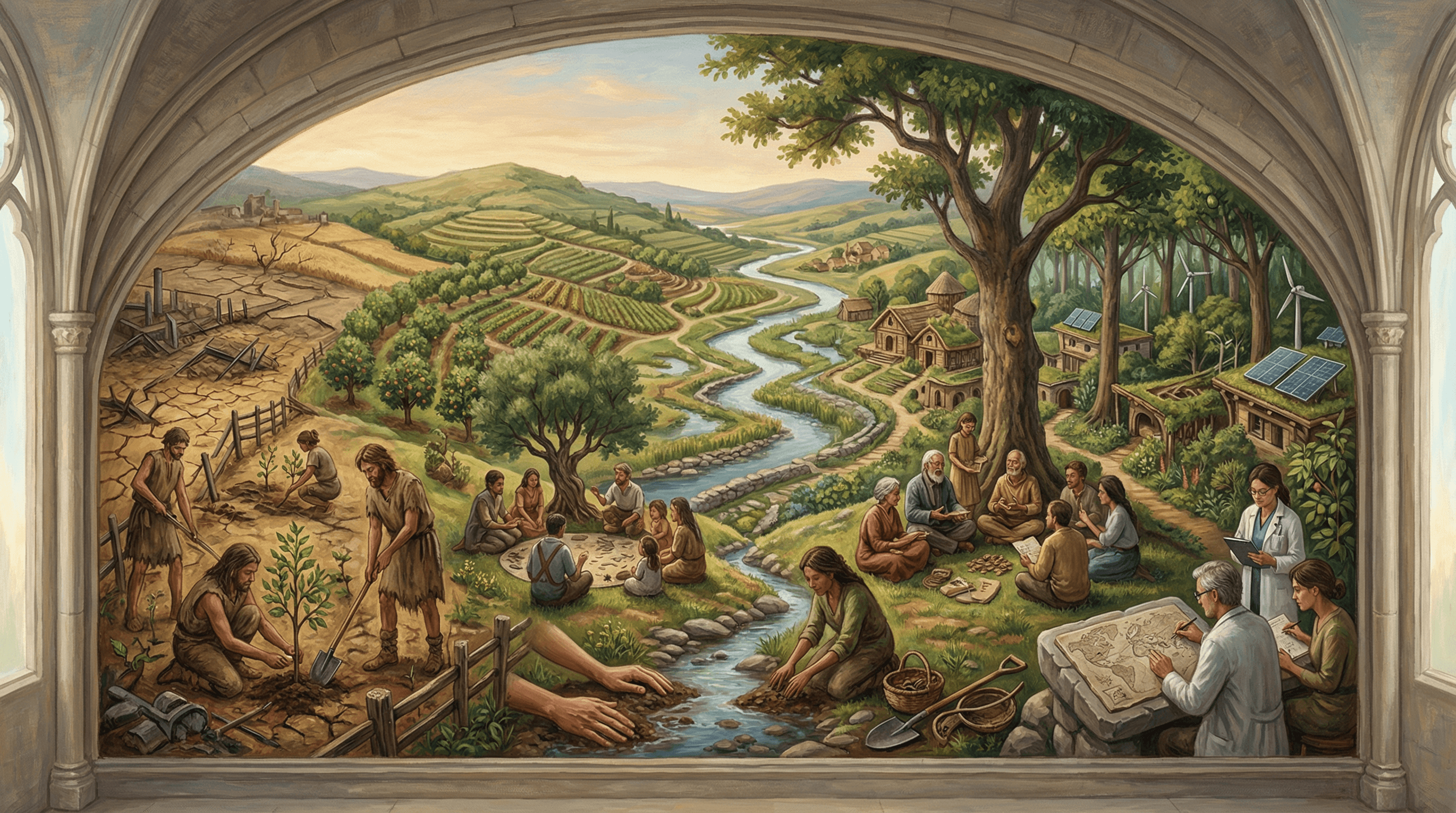
From Global Sustainability to Regenerative Sovereignty

From Global Sustainability to Regenerative Sovereignty

From Global Sustainability to Regenerative Sovereignty

Humanity stands at a crossroads.

For decades, we have been guided by global visions of sustainability, attempts to heal the planet, reduce suffering, and create a more balanced world. These efforts emerged from a sincere desire to protect life and ensure a future for generations to come.

Yet as these visions have unfolded, a deeper question has surfaced:
Can life truly regenerate through systems of external control? Or does regeneration require something more fundamental?

The Regenerative Community Objectives (RCOs) arise from this question.

Where the Current Model Falls Short

Where the Current Model Falls Short

Where the Current Model Falls Short

As the 2030 Agenda has moved from vision into implementation, its limitations have become increasingly visible.

Large-scale sustainability efforts have largely relied on centralized coordination, data-driven oversight, and top-down governance. In practice, this has introduced mechanisms such as global surveillance, digital identification, algorithmic management, and increasing economic and systemic dependency.

While framed as tools for optimization and accountability, these mechanisms risk reducing human beings to data points within managed systems. In attempting to save the planet, we may be eroding the very qualities that make regeneration possible: agency, trust, creativity, and relational intelligence.

A system cannot regenerate life by controlling it.

Why Regeneration Requires Sovereignty

Why Regeneration Requires Sovereignty

Why Regeneration Requires Sovereignty

Sustainability without sovereignty leads to stagnation.

True regeneration cannot be enforced, measured into existence, or administered from a distance. Living systems regenerate through self-organization, local intelligence, and responsibility held close to the ground.

The original intent of the SDGs—to uplift humanity and restore balance with the Earth, remains meaningful.
What must evolve however, is the methodology.

The next chapter of human development cannot be dictated from above. It must emerge from within communities, through conscious collaboration, and by restoring people’s ability to govern their own lives in relationship with the living world.

If you're feeling the call to be a part of this, we invite you to join the conversation.

If you're feeling the call to be a part of this, we invite you to join the conversation.

If you're feeling the call to be a part of this, we invite you to join the conversation.

The 2030 Regenda
A People-Led Evolution

The 2030 Regenda honors the same universal principles that inspired the SDGs—peace, prosperity, and planetary harmony—but reclaims them through a regenerative, community-driven lens.

Rather than asking, “How do we manage humanity?”
it asks, “How do we empower humanity to manage itself?”

The Regenda invites individuals, communities, and enterprises to become active nodes of regeneration—restoring balance within their local ecosystems, economies, and relationships, while remaining connected to a wider planetary network.

From Global Agenda to Planetary Alliance

From Global Agenda to Planetary Alliance

From Compliance to Participation

From Compliance to Participation

From Management to Stewardship

From Management to Stewardship

From Global Goals to Community-Lived Objectives

Regeneration cannot be standardized.

It must grow organically, through the hands of farmers, the minds of innovators, the hearts of artists, and the lived wisdom of communities in direct relationship with their land and culture.

The Regenerative Community Objectives (RCOs) represent this shift. They are not global targets set by institutions, but living objectives embodied by conscious communities.

Where the SDGs sought to measure change, the RCOs seek to embody it.
Where the SDGs emphasized coordination, the RCOs emphasize agency.

Each community is invited to localize, adapt, and practice these objectives in ways that make sense for their unique context.

The Four Domains of Humain Sovereignty

Regeneration must be holistic.

The RCOs are organized around Four Master Domains of Sovereignty,
reflecting the full spectrum of human experience and ecological relationship:

Each domain is essential. Neglecting one weakens the whole.

Physical
Physical
Physical

Our relationship with land, resources, health, and material systems

Intellectual
Intellectual
Intellectual

Our relationship with knowledge, technology, and creative intelligence

Emotional
Emotional
Emotional

Our relationship with one another, culture, and collective healing

Spiritual
Spiritual
Spiritual

Our relationship with meaning, governance, and the greater web of life

The Regenerative Community Objectives (RCO's) represent a new compass for the human species.

Understanding the
2030 Regenda
What We’re Evolving Beyond | From the SDGs to our RCOs

The 12 RCO's

The 12 RCO's

The 12 RCO's

The Regenerative Community Objectives represent a new compass for the human species — a living framework designed to guide our collective evolution from system dependence to global sovereignty. Each RCO is more than a goal — it is a living principle, a call to embody new systems of life that honor both human potential and planetary intelligence. Together, they form the architecture of a civilization rooted in ecological harmony, conscious collaboration, and cultural renewal.

DISCLAIMER:
The provided definitions of the 12 RCO's are a DRAFT.
They will be co-shaped with the founding stewards of this first cohort.

HAVE A QUESTION ?

HAVE A QUESTION ?

HAVE A QUESTION ?

What exactly is The 2030 Regenda?

The 2030 Regenda is a co-created initiative to design and activate pathways toward a regenerative civilization.

It’s both a manifesto and a living strategy — brought to life through a six-month cohort where aligned leaders come together to refine shared frameworks, catalyze projects, and practice new ways of collaborating beyond extractive systems.

This is not a finished plan being presented to you — it’s an invitation to help shape it.

What exactly is The 2030 Regenda?

The 2030 Regenda is a co-created initiative to design and activate pathways toward a regenerative civilization.

It’s both a manifesto and a living strategy — brought to life through a six-month cohort where aligned leaders come together to refine shared frameworks, catalyze projects, and practice new ways of collaborating beyond extractive systems.

This is not a finished plan being presented to you — it’s an invitation to help shape it.

What exactly is The 2030 Regenda?

The 2030 Regenda is a co-created initiative to design and activate pathways toward a regenerative civilization.

It’s both a manifesto and a living strategy — brought to life through a six-month cohort where aligned leaders come together to refine shared frameworks, catalyze projects, and practice new ways of collaborating beyond extractive systems.

This is not a finished plan being presented to you — it’s an invitation to help shape it.

Who is this cohort for?

This cohort is designed for founders, builders, funders, and ecosystem stewards actively working in — or moving toward — regenerative systems, conscious innovation, community building, or systemic change.

If you’re carrying a vision larger than what your current ecosystem can fully hold — and you’re ready to collaborate, contribute, and co-create — you’re likely in the right place.

Who is this cohort for?

This cohort is designed for founders, builders, funders, and ecosystem stewards actively working in — or moving toward — regenerative systems, conscious innovation, community building, or systemic change.

If you’re carrying a vision larger than what your current ecosystem can fully hold — and you’re ready to collaborate, contribute, and co-create — you’re likely in the right place.

Who is this cohort for?

This cohort is designed for founders, builders, funders, and ecosystem stewards actively working in — or moving toward — regenerative systems, conscious innovation, community building, or systemic change.

If you’re carrying a vision larger than what your current ecosystem can fully hold — and you’re ready to collaborate, contribute, and co-create — you’re likely in the right place.

What will actually happen during the six months?

The cohort functions as a living design lab.

Together, participants will:

  • Deepen and refine the 12 Regenerative Community Objectives (RCOs)

  • Form focused working pods around specific RCOs and initiatives while bringing to life that RCOs first action project

  • Surface clear needs, offers, and collaboration pathways

  • Catalyze real projects, partnerships, and funding conversations

  • Practice decentralized, regenerative ways of organizing and deciding

The structure is clear — but the outcomes are emergent, shaped by the people in the room and the projects that want to move through it.

What will actually happen during the six months?

The cohort functions as a living design lab.

Together, participants will:

  • Deepen and refine the 12 Regenerative Community Objectives (RCOs)

  • Form focused working pods around specific RCOs and initiatives while bringing to life that RCOs first action project

  • Surface clear needs, offers, and collaboration pathways

  • Catalyze real projects, partnerships, and funding conversations

  • Practice decentralized, regenerative ways of organizing and deciding

The structure is clear — but the outcomes are emergent, shaped by the people in the room and the projects that want to move through it.

What will actually happen during the six months?

The cohort functions as a living design lab.

Together, participants will:

  • Deepen and refine the 12 Regenerative Community Objectives (RCOs)

  • Form focused working pods around specific RCOs and initiatives while bringing to life that RCOs first action project

  • Surface clear needs, offers, and collaboration pathways

  • Catalyze real projects, partnerships, and funding conversations

  • Practice decentralized, regenerative ways of organizing and deciding

The structure is clear — but the outcomes are emergent, shaped by the people in the room and the projects that want to move through it.

How do I know this will lead to tangible results — not just good conversations?

This cohort is designed around activation, not abstraction.

From the beginning, the process emphasizes:

  • Clear articulation of projects, needs, and offers

  • Small-group pods with defined focus and momentum

  • Documentation of insights, decisions, and next steps
    A shared synthesis that carries forward beyond the six months

The goal is not to “finish” everything — it’s to create durable structures, relationships, and launchpads that continue producing value long after the cohort ends. Think of this as building foundations and connective tissue, not just ideas.

How do I know this will lead to tangible results — not just good conversations?

This cohort is designed around activation, not abstraction.

From the beginning, the process emphasizes:

  • Clear articulation of projects, needs, and offers

  • Small-group pods with defined focus and momentum

  • Documentation of insights, decisions, and next steps
    A shared synthesis that carries forward beyond the six months

The goal is not to “finish” everything — it’s to create durable structures, relationships, and launchpads that continue producing value long after the cohort ends. Think of this as building foundations and connective tissue, not just ideas.

How do I know this will lead to tangible results — not just good conversations?

This cohort is designed around activation, not abstraction.

From the beginning, the process emphasizes:

  • Clear articulation of projects, needs, and offers

  • Small-group pods with defined focus and momentum

  • Documentation of insights, decisions, and next steps
    A shared synthesis that carries forward beyond the six months

The goal is not to “finish” everything — it’s to create durable structures, relationships, and launchpads that continue producing value long after the cohort ends. Think of this as building foundations and connective tissue, not just ideas.

How is this serving my projects and my personal development?

For founders and builders, the cohort provides:

  • Access to aligned collaborators, funders, and ecosystem stewards

  • Strategic reflection and refinement of your work within a larger systems context

  • Increased visibility and resonance within a trusted network

For funders and stewards, it offers:

  • Clearer signal in the regenerative space

  • Direct relationships with projects and leaders at the ground level

  • A role in shaping shared frameworks rather than reacting to fragmented initiatives

For everyone, it is also a personal initiation — into deeper coherence, responsibility, and leadership within a planetary context.

How is this serving my projects and my personal development?

For founders and builders, the cohort provides:

  • Access to aligned collaborators, funders, and ecosystem stewards

  • Strategic reflection and refinement of your work within a larger systems context

  • Increased visibility and resonance within a trusted network

For funders and stewards, it offers:

  • Clearer signal in the regenerative space

  • Direct relationships with projects and leaders at the ground level

  • A role in shaping shared frameworks rather than reacting to fragmented initiatives

For everyone, it is also a personal initiation — into deeper coherence, responsibility, and leadership within a planetary context.

How is this serving my projects and my personal development?

For founders and builders, the cohort provides:

  • Access to aligned collaborators, funders, and ecosystem stewards

  • Strategic reflection and refinement of your work within a larger systems context

  • Increased visibility and resonance within a trusted network

For funders and stewards, it offers:

  • Clearer signal in the regenerative space

  • Direct relationships with projects and leaders at the ground level

  • A role in shaping shared frameworks rather than reacting to fragmented initiatives

For everyone, it is also a personal initiation — into deeper coherence, responsibility, and leadership within a planetary context.

What is the actual output of this cohort, and how does it impact the world?

By the end of the six months, we expect to have:

  • A refined, collectively stewarded articulation of the 12 RCOs serving as the blueprint for a Regenerative Civilization

  • Activated project pathways and collaboration clusters within each RCO

  • A clearer map of who is doing what — and how efforts can align

  • A shared operating rhythm for ongoing collaboration beyond the cohort

  • An RCO specific initiative activated and deployed within each of the 12 RCOs

The deeper output, however, is less visible but more powerful: together we will cultivate a coherent field of people and projects who know how to work together, and are actively doing so. This field is what will give the 2030 Regenda real-world traction.

What is the actual output of this cohort, and how does it impact the world?

By the end of the six months, we expect to have:

  • A refined, collectively stewarded articulation of the 12 RCOs serving as the blueprint for a Regenerative Civilization

  • Activated project pathways and collaboration clusters within each RCO

  • A clearer map of who is doing what — and how efforts can align

  • A shared operating rhythm for ongoing collaboration beyond the cohort

  • An RCO specific initiative activated and deployed within each of the 12 RCOs

The deeper output, however, is less visible but more powerful: together we will cultivate a coherent field of people and projects who know how to work together, and are actively doing so. This field is what will give the 2030 Regenda real-world traction.

What is the actual output of this cohort, and how does it impact the world?

By the end of the six months, we expect to have:

  • A refined, collectively stewarded articulation of the 12 RCOs serving as the blueprint for a Regenerative Civilization

  • Activated project pathways and collaboration clusters within each RCO

  • A clearer map of who is doing what — and how efforts can align

  • A shared operating rhythm for ongoing collaboration beyond the cohort

  • An RCO specific initiative activated and deployed within each of the 12 RCOs

The deeper output, however, is less visible but more powerful: together we will cultivate a coherent field of people and projects who know how to work together, and are actively doing so. This field is what will give the 2030 Regenda real-world traction.

Is this connected to the UN’s 2030 Agenda?

The 2030 Regenda is not affiliated with the UN, nor is it an opposition movement.

It emerged as a regenerative counterpart — seeking to evolve beyond centralized, top-down approaches by empowering communities, ecosystems, and local initiatives to embody sustainability through sovereignty, collaboration, and lived practice.

Is this connected to the UN’s 2030 Agenda?

The 2030 Regenda is not affiliated with the UN, nor is it an opposition movement.

It emerged as a regenerative counterpart — seeking to evolve beyond centralized, top-down approaches by empowering communities, ecosystems, and local initiatives to embody sustainability through sovereignty, collaboration, and lived practice.

Is this connected to the UN’s 2030 Agenda?

The 2030 Regenda is not affiliated with the UN, nor is it an opposition movement.

It emerged as a regenerative counterpart — seeking to evolve beyond centralized, top-down approaches by empowering communities, ecosystems, and local initiatives to embody sustainability through sovereignty, collaboration, and lived practice.

Maybe now is not the time for you to join (yet)?

Maybe now is not the time for you to join (yet)?

Maybe now is not the time for you to join (yet)?

We still would love for you to stay part of the journey and conversation.

Participation is an act of alignment, not urgency. If this vision resonates but the timing isn’t right, or you’d just like to stay in the know, you’re welcome to stay connected and explore involvement in the future. Leave your email and we’ll keep you informed as The 2030 Regenda unfolds — with opportunities to engage, contribute, or step in when it feels aligned. No pressure. No obligation.