RCO #1 | Bioregional Stewardship & Land Regeneration
Bioregional stewardship recognizes that the foundation of a regenerative civilization begins with the restoration of the living systems that sustain it. Every human community is nested within a bioregion — a unique ecological, hydrological, and cultural landscape whose health determines the quality of life for all species within it. Land regeneration is therefore not a sectoral initiative but a moral and operational baseline for civilization itself.
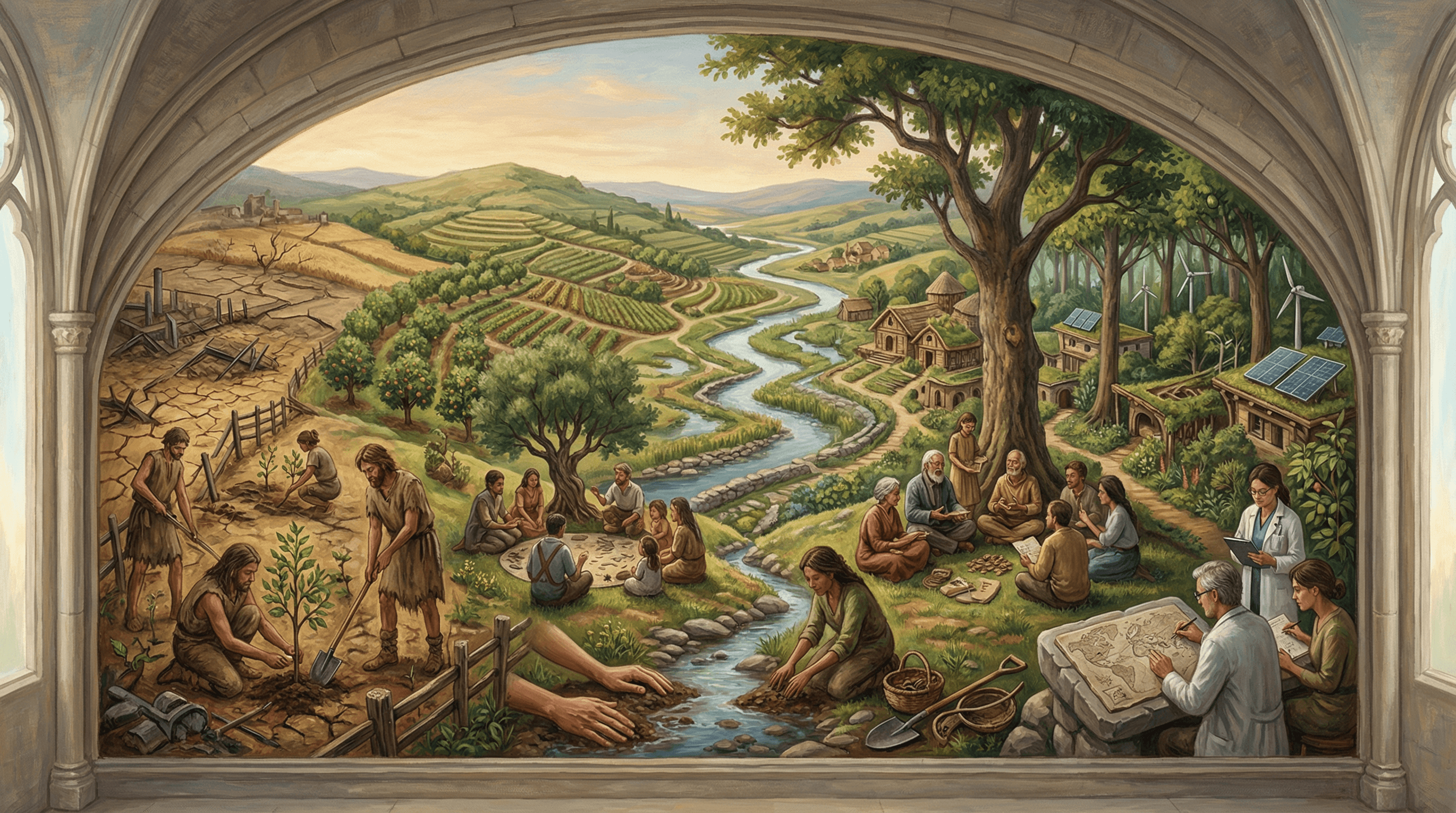
RCO #1 | Bioregional Stewardship & Land Regeneration
Essence / Core Premise
Bioregional stewardship recognizes that the foundation of a regenerative civilization begins with the restoration of the living systems that sustain it. Every human community is nested within a bioregion — a unique ecological, hydrological, and cultural landscape whose health determines the quality of life for all species within it. Land regeneration is therefore not a sectoral initiative but a moral and operational baseline for civilization itself.
Why It Matters
Industrial models of extraction, monoculture agriculture, and centralized food and resource distribution have degraded 70% of the planet’s ecosystems and disrupted natural cycles of water, carbon, and nutrients. This has led to soil infertility, biodiversity loss, climate instability, and mass displacement. Bioregional stewardship shifts governance and resource management from global abstraction to place-based accountability. It re-roots human systems in ecological intelligence, ensuring that production, habitation, and development occur within the carrying capacity of local ecosystems. Regeneration becomes a civic duty rather than a compensatory act.
Pathways of Action | How it comes alive.
Bioregional Mapping & Land Trusts:
Establish open-source ecological maps identifying watersheds, soil types, and biodiversity corridors. Use this data to create community land trusts and legal frameworks that protect land from speculative ownership.

The 2030 Regenda:
A Manifesto & Strategic Plan for a Regenerative Civilization
Regenerative Agriculture & Agroforestry:
Transition monoculture farms into polycultural systems using permaculture, syntropic, and agroecological practices that rebuild soil and increase local food sovereignty.
Watershed Restoration:
Implement decentralized water-management systems — swales, rainwater harvesting, greywater recycling — that restore hydrological balance at the community scale.
Local Bioregional Councils:
Form governance bodies composed of local stewards, indigenous leaders, scientists, and citizens to coordinate regeneration projects and align development with ecological limits.
Regenerative Infrastructure:
Build housing, energy, and transport systems using circular-economy principles — materials that are locally sourced, non-toxic, and energy-autonomous.
2030 Target | 3030 Vision
By 2030, at least 100 recognized bioregional hubs operate as living laboratories of regeneration — restoring soils, securing watersheds, and producing the majority of their food and materials locally. By 3030, Earth’s land-use model is fully regenerative: every bioregion self-manages its ecological assets, global trade exists only for surplus and innovation exchange, and the biosphere functions as a consciously maintained planetary garden.

We still would love for you to stay part of the journey and conversation.
Participation is an act of alignment, not urgency. If this vision resonates but the timing isn’t right, or you’d just like to stay in the know, you’re welcome to stay connected and explore involvement in the future. Leave your email and we’ll keep you informed as The 2030 Regenda unfolds — with opportunities to engage, contribute, or step in when it feels aligned. No pressure. No obligation.